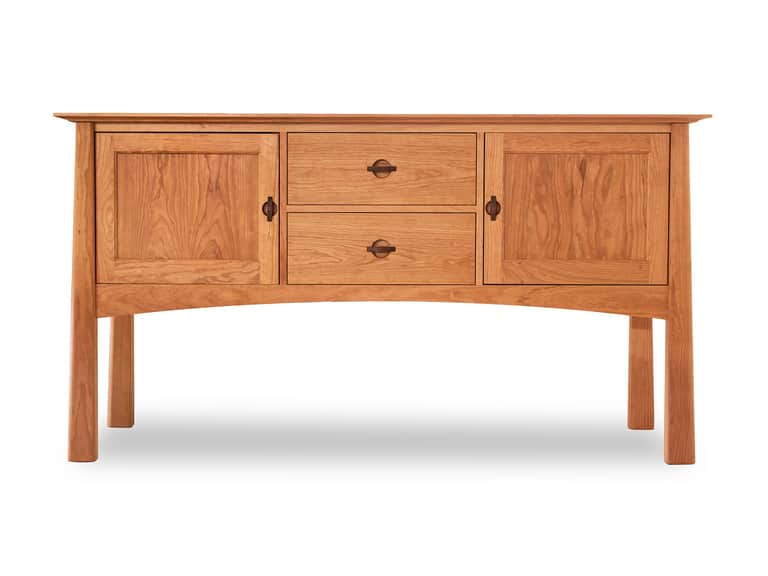
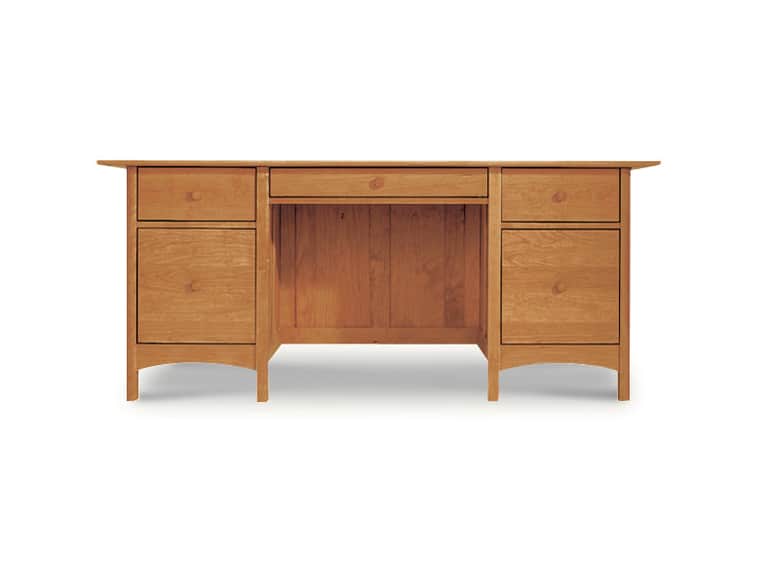
Small Workspace Planning
Choosing a Modern Writing Desk for a Small Home Workspace
A desk in a compact room has to earn its place. The right one supports the work, stores what matters and leaves enough space to move—without making the rest of the room feel like an afterthought.
A home workspace often begins with a practical compromise: a corner of a bedroom, a stretch of wall in the living room, or a small room asked to do several jobs at once. In those settings, a writing desk is more than a surface. Its proportions affect how the room functions, how comfortably someone can work and whether the space can return to its other purpose when the day is done.
Choosing well means looking beyond a desk’s silhouette. Floor area, chair clearance, work habits, storage needs, construction and finish all matter. A beautiful desk that blocks a doorway or leaves no room to pull out a chair is not a good fit. Nor is a tiny surface that forces papers, a laptop and everyday supplies into an unworkable pile. The aim is not simply to find the smallest desk. It is to find the most useful desk that the room can comfortably accommodate.
Modern design can help. Clean lines, uncomplicated forms and carefully considered details can make a piece feel at home in a room that serves several purposes. But “modern” is not a measurement, and a restrained appearance does not guarantee a compact footprint. Treat the label as a description of style, then assess the actual dimensions and function against the space available.
Begin with the room, not the desk
Before comparing furniture, map the workspace. Measure the length and depth of the area where the desk might sit, including any baseboards, radiators, door swings or built-in features that reduce usable space. A wall may appear long enough until a closet door opens into it. A corner may look ideal until a chair has nowhere to go.
Record the available floor area and the height of nearby windowsills, shelves and outlets. If the desk will sit beneath a window or wall-mounted storage, check that the surface height and any raised details will not conflict. In a shared room, note the pathways people use and the furnishings that need to remain accessible. The desk should fit the room’s daily rhythms, not just the empty patch visible in a floor plan.
Then mark out the desk’s proposed dimensions. Painter’s tape on the floor can outline the footprint; a cardboard template can help show how much depth the surface will occupy. This simple trial makes scale more tangible. Sit in the intended chair, pull it back, and walk around the marked area. Try opening drawers or cupboard doors if the design includes them. A desk’s footprint is only the beginning of the space it requires.
Allow room for movement
Comfort depends on clearance as much as on furniture dimensions. A chair needs room to slide back, and the person using it needs space to enter, turn and stand without bumping into a bed, sofa or filing cabinet. There is no single clearance figure that works for every room and chair, but the practical test is clear: can the workspace be used without repeated awkward shuffling?
Consider what happens behind the chair. If it backs onto a wall, the arrangement may need a compact chair that tucks in closely. If it sits in a circulation path, the desk may need to move or the layout may need to change. A narrow walkway that looks acceptable on paper can become frustrating when someone carries a laundry basket, reaches for a shelf or tries to pass while the chair is occupied.
These checks are especially important in multipurpose rooms. A small home workspace should not quietly take over the route to a closet or make the living area difficult to use. A well-planned desk area can feel deliberate and integrated; a poorly placed one can make the entire room seem smaller.
Match the work surface to the work
A writing desk can be compact without being cramped. The key is to identify what must fit on the surface during a typical work session. A laptop and notebook need less room than a monitor, keyboard, reference books and paperwork. Someone who writes by hand may value a broad, uninterrupted area; someone who uses a computer may need space for a mouse and a stable screen position.
Make a list of the objects that stay on the desk every day. Include chargers, a lamp, a notebook, a cup or any equipment that cannot easily be put away. Then distinguish between essentials and occasional items. The aim is to size the surface for regular work—not for every object that might visit it once a month.
A slightly wider top can make a small workspace more functional if the room can take it. It offers room to spread out papers or move a laptop aside while writing. But extra depth can intrude into a walkway, and extra width can crowd adjacent furniture. Think in terms of the usable rectangle: the surface needs enough area for the task while still allowing the chair and room to work around it.
Also consider the surface’s shape and edge. Straight sides make it easier to place a desk close to a wall and can help the piece read as orderly in a compact room. A curved or unusually deep top may offer a distinctive look but consume more floor space than its overall width suggests. If the desk has an overhang, apron or other feature beneath the surface, check how it affects legroom and the position of the chair.
Let storage solve a real problem
Drawers can make a small workspace feel calmer by keeping supplies close and the work surface clear. They can also add bulk. Before choosing a desk with built-in storage, decide what needs to live within reach: pens, cables, notebooks, documents or perhaps a laptop when the desk is not in use. A small number of useful drawers may be more effective than a larger storage arrangement that makes the desk heavy and difficult to place.
Check drawer placement as carefully as drawer count. A drawer positioned where the chair or legs need to go can reduce comfort. A drawer that opens into a nearby wall or bed may be awkward to use. If the room is tight, measure the opening space as well as the desk itself. The same principle applies to file drawers, which can require substantial clearance when fully extended.
Storage does not have to be built into the desk. A separate file cabinet, wall shelf or small set of boxes can offer flexibility, especially when work requirements change. Separate storage may allow a slimmer writing desk and can be placed elsewhere in the room. Its trade-off is that another piece of furniture takes up space and may introduce visual clutter.
Think of the system as a whole. Frequently used items should be easy to reach; reference materials and supplies used less often can live elsewhere. If the desk is in a shared room, a drawer or container that closes can help work materials disappear at the end of the day. This kind of visual reset is not merely aesthetic: it helps the workspace return to being part of the home.
Consider construction for everyday use
A desk is a working tool, and its construction affects how it behaves in daily life. Solid hardwood is one option for a durable, substantial piece. Wood species vary in color, grain and character, so the material can also influence the room’s overall feel. In a compact space, the visible grain and finish may have a notable presence, particularly when the desk sits in a bedroom or living area rather than a separate office.
Construction details deserve attention alongside material. Examine how the legs meet the frame, how the drawers are built and whether the piece feels stable. A desk that wobbles during typing or writing can become a persistent distraction. Joinery, drawer slides and hardware affect the experience of opening, closing and using the furniture over time. These details are not always obvious in a quick glance, so product specifications and clear descriptions are worth reviewing.
Handcrafted furniture can offer careful attention to detail and natural material character, but craftsmanship alone does not establish that a particular desk suits a particular room. Verify dimensions, storage layout, delivery requirements and lead time. A made-to-order piece may take longer to arrive, and a solid-wood desk may have a weight that matters when moving it into an upper-floor room or repositioning it later.
Think practically about maintenance, too. Wood can change subtly with light and use, and an oil finish may have different care needs from a film-forming finish. Ask what routine cleaning is recommended and whether the finish can be refreshed. A desk intended for frequent use should be chosen with its upkeep in mind, not just its appearance on the day it arrives.
Choose a finish that supports the room
Finish is both a protective layer and a design decision. An oil finish can emphasize the natural grain and leave wood with a tactile, understated character. Other finishes may create a different sheen or provide a different surface feel. The right choice depends on the maker’s specifications, the expected use and the surrounding furnishings.
In a small room, visual weight matters. A desk with a strong grain, dark tone or substantial frame can become a focal point. That may be welcome, especially if the rest of the space is simple. If the room already contains patterned fabrics, prominent shelving or several large pieces, a quieter finish and uncomplicated silhouette may help the desk blend in rather than compete.
Look at samples in the light where the desk will be used, if possible. Daylight, warm lamps and neighboring wood tones can change how a finish appears. A finish that seems pale in one setting may read warmer or darker elsewhere. Consider nearby flooring and furniture, but do not assume every wood tone must match exactly. A deliberate contrast can feel cohesive when the shapes, undertones or other room details create a connection.
Modern style is often associated with simplicity, yet simplicity is not the absence of character. Tapered legs, eased edges, a carefully shaped top or a contrasting pull can give a writing desk distinction without adding visual clutter. The useful question is whether those details serve the room and the work—or merely draw attention to themselves.
Plan for posture and daily routine
A compact desk still needs to support comfortable use. The work surface should suit the chair and the person using it. When seated, the arms should be able to rest comfortably while working, and the legs should have enough room to move. A desk that looks elegant but forces the chair too high or low can make sustained work tiring.
Check the relationship between desk height, chair height and equipment. If a monitor is part of the setup, plan its position and the distance from the user rather than adding it as an afterthought. A laptop used for long sessions may call for a separate keyboard or other adjustment to make the arrangement more comfortable. A lamp should illuminate the work without casting distracting shadows or consuming the only free space on the surface.
Work habits also shape the right storage plan. Someone who works primarily on a computer may need fewer paper files but more room for cables and accessories. A person who regularly reviews documents may need a clear area for reading and a place to sort papers. If work is occasional, a simpler desk may be sufficient. If the desk is used throughout the day, stability, surface area and reach become more important than a barely adequate footprint.
Use a measured checklist before deciding
Before settling on a modern writing desk, bring the practical questions together. A short checklist can prevent a style-led decision from becoming a spatial problem:
- Measure the location: Record usable width and depth, including obstacles such as doors, trim, outlets and radiators.
- Test the chair: Allow room to sit, move back and stand without blocking a regular pathway.
- List daily equipment: Identify what must remain on the work surface and what can be stored elsewhere.
- Check storage access: Confirm that drawers can open fully and that their placement does not interfere with legs or nearby furniture.
- Review construction: Look at the material, stability, drawer details, hardware and finish-care guidance.
- Confirm delivery realities: Check the desk’s dimensions and weight against entrances, stairs and the intended room.
- Try the layout: Mark the footprint on the floor and test the arrangement before committing.
This process may reveal that the original location is not the best one. Moving the desk to a different wall, adjusting the position of a lamp or choosing separate storage can improve the entire setup. Sometimes the most effective space-saving decision is not a smaller desk, but a more thoughtful arrangement.
Make the desk part of the home
A home workspace succeeds when it supports work without overwhelming the room around it. That balance is especially important where a desk shares space with a bed, sofa or dining area. A restrained modern design can help furniture coexist, but layout and routine do much of the work. Keep the desktop limited to what is useful, provide a place for cables and papers, and make it easy to put work away when the day ends.
Small-space planning is a series of trade-offs, not a contest to eliminate every inch. A little extra surface may be worth the space it takes if it makes work more comfortable. Drawers may be worthwhile if they reduce clutter, but unnecessary storage can turn a light-looking desk into a bulky one. Solid hardwood may offer material character and a durable feel, while the desk’s dimensions and construction determine whether it is practical in the room.
The best modern writing desk for a small workspace is therefore not defined by a single style, material or drawer count. It is the desk that fits the measured area, supports the work performed there and leaves the room usable for everything else. Begin with the room, make choices around real habits, and let design follow function. In a compact home, that is how a desk earns its place.